


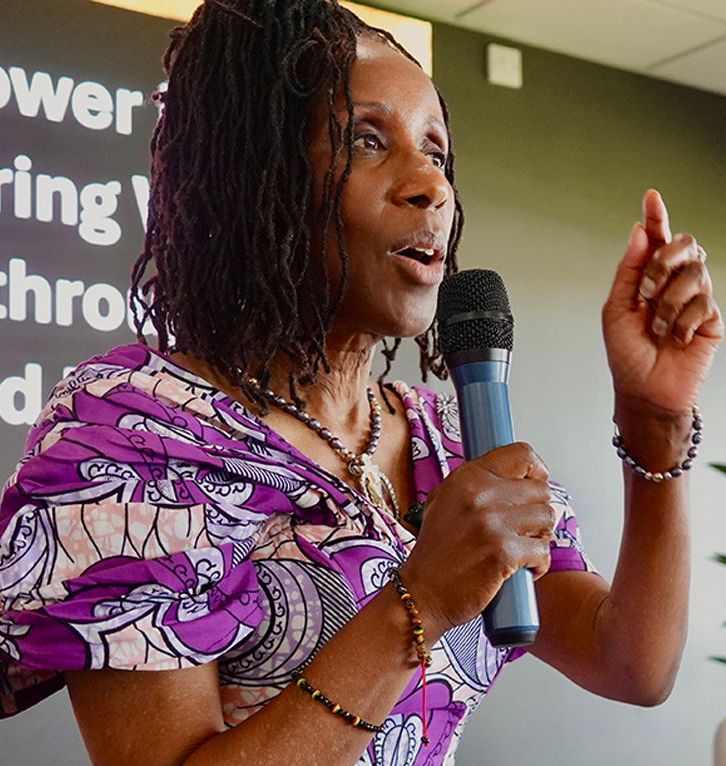
On Wednesday, May 27th, a momentous event unfolded at Gloucester’s Rugby Stadium. Approximately, 180 people gathered to witness history being made – the long-awaited and eagerly anticipated inaugural Black Mental Health Conference in Gloucestershire. This historic gathering, aptly titled “The Black Man’s Burden: The Crisis in Black Mental Health Conference,” was graced by the presence of the First Black Mayor of Gloucester Councillor Adrian Graham, a privilege I personally welcomed.
One of the visions I had, when I embarked on the Restore Black journey, was to organise a Black Mental Health conference. Guided by my faith, I prayed fervently about this vision. I am deeply grateful to God for connecting me with the incredible individuals who have helped bring this vision to fruition.
Let me share the beginning of my opening address at the conference, to help set the tone, for those who were not able to attend:
In her book, award-winning broadcaster, jounalist, and film maker, An African History of Africa, Zainab Badawi recounts a conversation with the eminent Nigerian historian, Professor Muyiwa Falaiye at the University of Lagos, who said,
“A Black person needs to write their own history, speak for themselves, to give a different perspective from what is orchestrated by the West, and I say this against the backdrop of the fact that no one can explain your history better than yourself. If you look at the history of Africa and its belief system with the mindset of the West, you are bound to misunderstand what the African stands for. You need to understand what Africans do, why they think the way they do. For me, this is of utmost significance: telling the history is not enough, understanding the mindset of the African is more important.”
This powerful insight underscores the conference’s significance; it’s not merely about storytelling or historical recounting but understanding the mindsets, lived experiences and cultural contexts shaping Black mental health today. It’s a call to reclaim our narratives and centre our voices in these crucial conversations.
As we begin this important gathering, I want to emphasise that this conference transcends being just an event; it’s a call to action. It presents an opportunity to explore the challenges and burdens endured by the Black community for generations.
Many were uncertain about what to expect and, while I’m sure they were also excited, there was likely some apprehension. In my invitation to key stakeholders, I hope I reassured them that the conference wasn’t about putting anyone on the spot or holding individuals accountable. Instead, it aimed to foster understanding and inspire thoughtful reflections on how they could better reach and serve Black and Brown communities, often mislabelled as “hard to reach.”
I witnessed the remarkable progress made throughout the day as we delved into the Black burden. The space felt safe, with attendees expressing feelings like “it felt like home” and “I felt safe,” and, “educational, learned things I never knew.” Tears flowed from attendees, organisers and participants, and laughter and love filled the room. Something extraordinary was happening; the burden was being explained, thoughts were being processed, connections were being made, conversations were being had, heartfelt apologies were exchanged privately and enthusiasm to return to work with renewed hope and necessary changes was evident.
Throughout the day, we observed different clusters of people engaging in conversations, embracing, laughing, thanking and exchanging contacts. They stayed all day and they stayed long after the conference ended, continuing their discussions.
Leaving the conference, I’m still feeling exhausted with joy and gratitude for everyone who attended. Publicly or privately, they shared their stories and vulnerabilities, making the conference truly memorable.
I extend my heartfelt thanks to the team: The Barnwood Trust, for their unwavering belief in this vision. Not only for their generous financial contributions, but for lending their staff:
- To Josh, Ibby, Audrey, Research and Comms Teams, who worked closely with me, my gratitude is immense
- The Black South West Network (BSWN) with special thanks to Nathalie Sherring for your unwavering support of me
- Last but not least , I express my deepest appreciation to Mervyn Weir, a steadfast companion from the very beginning of Restore Black. Mervyn’s creative genius is evident in the beautiful Restore Black logo, website and the powerful artwork of the “The Black Man’s Burden” poster and his powerful poem, ‘The Black Burden’ written and read especially for the day. Together, as a dedicated team, we worked tirelessly to make this vision a reality
A special thank you goes to the speakers and presenters for the day:
- Chris Dzikiti, Interim Chief Inspector of Mental Health Care, delivered a keynote address on Black men’s experiences with mental health services.
- Charles Brown, a Psychoanalytical Psychotherapist, explored “The intersection of addiction and racism: how social inequality and historic oppression uniquely affect the Black body’s vulnerability to addiction”.
- Dr Leroy Logan gave a second keynote titled “Breaking Barriers: Leadership, Policing, and Black Mental Health”.
- Damel Carayol joined me for a poignant conversation on “Grenfell Tower Eye-sore!! Final Straw: Bearing Witness A Journey Through Trauma and Recovery”.
- Sandra Samuels, Diversity, Equality and Inclusion Manager at the Gloucestershire Police Constabulary, joined the panel discussion “Unpacking the Burden: Black Mental Health, Power, and Possibility” alongside the other speakers.
- Matt Little CEO Barnwood Trust and Malaki Patterson, CEO of The Music Works, participated in “A Conversation with Tina Ajuonuma, Founder and CEO The Better Org” about “What Does Repair Look Like in Practice?”.
- Philippa Smith reflected on history, discussing Windrush experiences.
- Ronnie McGrath, who opened the conference with drumming, joined me in conversation, along with two participants, Jess Henry and Jeff Turner, from Gloucester’s first Black Therapy Groups to discuss what the group meant to them.
- And last but certainly not least, special thanks also goes to Celestine Walcott-Gordon our talented and gifted singer who graced us with her beautiful voice throughout the day, and Rob Mitchell the host who rounded out the programme.
I will keep you updated on what’s happening and what’s coming next. At the end of both my opening address and closing remarks, I challenged everyone, not just organisations but also individuals, to change how they approach change, and to use their voice to call out injustices when they see it. To close this blog, I want to share a quote I read this morning from someone who eloquently described a key takeaway from the conference that she has already begun applying. It would be wonderful to hear that everyone who attended is putting something they learned into practice:
“Today, during a meeting, I found myself repeating a phrase that really stayed with me from the conference: “How can I make a change if I am not in the room?” That reflection alone has already shifted the way I think about representation, involvement, and creating impact.
Thank you again for creating such an important and moving event, and for giving people like me the confidence to continue speaking up and striving for change.”
Natasha Panchbhaya


