


A reflection ahead of World Mental Health Day, 10th October
Content note: This post mentions bereavement, domestic abuse and violence, alcohol misuse and infidelity. Please read with care, and see the support information at the end.
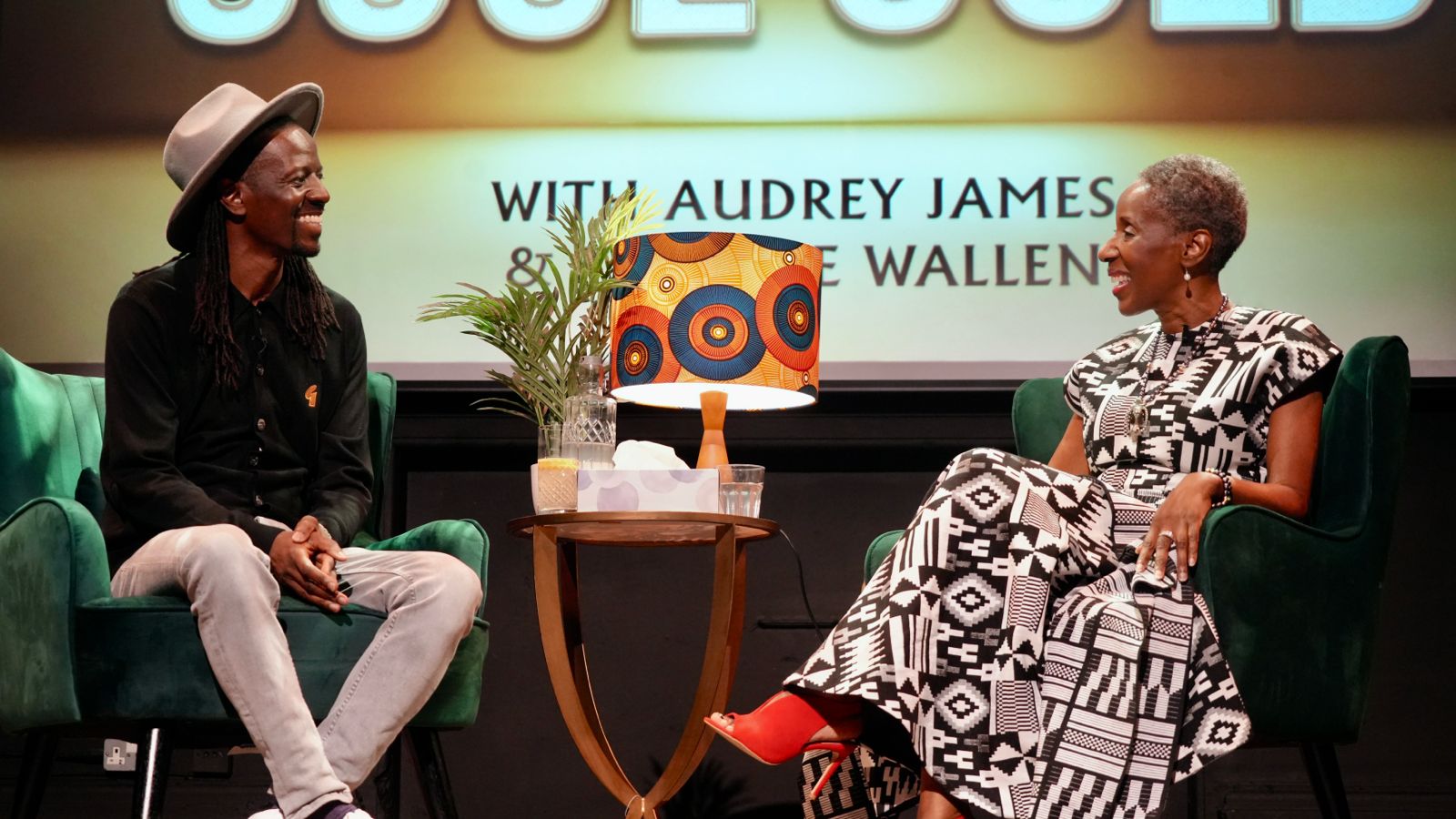
A week ago today, the Guildhall in Gloucester held something special. Restore Black Presents Soul Gold: Singing Through the Storm, an evening with Terence Wallen, the official Gregory Isaacs Tribute Artist, and I'm still sitting with and processing it.
The format was simple: a live, on-stage therapy session woven together with song. What happened in that room was anything but simple. Terence gave so much of himself, and you could feel the audience feel it. The emotion was palpable.
The golden child, and the man behind the showman
Terence spoke about growing up as the golden child, spoilt and adored, and about how close he was to his mum. He then spoke about his brother. Nine years on, the loss still weighs on him, and he was honest that he is not ready to let him go. Five years after losing his brother, he lost his mum too.
He also told us how Gregory Isaacs came into his life: through an album given to him as a child by his late brother. Music, for Terence, is not just a career. It is a thread of love, memory and connection to the people he has lost, and a form of therapy.
Grief doesn't follow a timetable
Hearing a man speak openly about grief that has lasted over a decade, without apology and without a neat resolution, was a gift to everyone present. Many of us carry losses that others assume we should have “got over”. Terence reminded the room that grief is not something to be fixed on a schedule. It is something we learn to live alongside, and it is easier to carry when it is witnessed.
Relationships, fathers and the patterns we inherit
In the live session I asked Terence about relationships, and he answered with real honesty. He spoke about his father, who was unfaithful to his mother and became an absent father. Terence was clear that he never wanted to be like his father.
Terence spoke about his father’s “antics”, by which he meant the domestic abuse he grew up around: a great deal of verbal abuse, things smashed in anger, and a constant pattern of drinking linked to alcohol misuse. Then, openly and candidly, he added: “However, my dad never physically put his hands on my mum. I say this because I was a perpetrator of domestic violence.”
He spoke warmly about his five children, and about how he loves and cares for them. He traced that love back to his late brother, who became a surrogate father to him. What his brother gave him, he now gives to his own children.
Then came a moment that showed why this kind of work matters. Through the live therapy sessions, several links were made for the first time. One was that, while Terence had been adamant he would never be like his father, he recognised that he had repeated some of the same “antics” in the way he treated the mothers of his children.
That is not an easy thing to say, least of all in front of a room full of people. It took courage to look at it and to say it out loud. It also reflects something we see often in therapy: the patterns we most want to escape are often the ones we carry without noticing, until someone helps us see the thread. Seeing it is not about blame. It is the first step towards choosing differently.
Accountability, forgiveness and the stains that remain
During the live session, Terence shared that he had sought forgiveness for his actions, and that forgiveness was given. He also told the audience that his next book, Guilty, is all about his actions and his self-reflections, and about bringing about change.
In a follow-up conversation after the event, he told me that ongoing therapy and maturity had helped him to take accountability for what he did. Forgiveness, he said, was a weight removed. But he was also clear that it does not wipe the slate clean: “Because the violence has stopped and forgiveness is given, the stains still remain, and that can have its own impact on his mental health.”
As a therapist, I find that an honest and mature place to stand. Accountability and forgiveness matter, but they are not the same as resolution. When the violence stops and forgiveness is offered, the impact can still linger, most of all for those who were harmed. For any man on his own journey of change, the message is a hopeful but realistic one: change is possible, it is worth doing the work, and the work does not end when the behaviour does.
.jpeg)
In his own words
The day after, Terence shared this:
“Last night as I put on my status was my most heartfelt event/show to date. The lessons learnt, the realisations, the freedom to be vulnerable, making me comfortable, making me feel safe, understanding through cultural appropriateness, the window to speak uninterrupted, giving me a voice that's not only Gregory's but mine, allowing me to be 'Terry' the brother of Sted and son of Gloria instead of just Terence The Showman and the people's artist.”
That message says what we hoped the evening would offer: a space safe enough, and culturally attuned enough, for a man to put down the persona and simply be Terry.
Music, laughter and dancing
It was an emotional night, but not a heavy one. Alongside the tears there was laughter, there was music, and by the end there was dancing. After the Q&A, Terence treated the audience to a 20-minute glimpse of his set as Terence Wallen, the Official Gregory Isaacs Tribute Artist. The room that had been holding its breath moved together. That, to me, is what healing can look like: grief and joy sharing the same space.
Why this matters for World Mental Health Day
World Mental Health Day arrives on 10th October, and Soul Gold felt like a living example of what it asks of us. Too often, particularly for men, and particularly in Black communities, there is pressure to be strong, to perform, to keep the mask on. Terence is “the Showman” and “the people's artist”, and still he chose to be vulnerable in front of a room of people. That is not weakness. It is courage, and it gives others permission.
His willingness to name a painful pattern also shows that insight is possible at any stage of life, and that it is easier to find in a safe, unhurried space.
What made it possible was not a clinical setting but culture: music that people love, a safe and unhurried space, and the chance to be heard without interruption. If we want people to talk about their mental health, we have to meet them where they are, in ways that feel familiar and respectful of who they are.
This World Mental Health Day, I'd invite you to:
- Make space for someone to speak without interruption.
- Honour your losses, however long ago they happened.
- Look at your patterns with curiosity rather than blame.
- Find your own “music”, whatever helps you feel safe enough to be yourself.
- Reach out, whether to a friend, a community group or a professional.
- Join the circle: see Real Talk, below.
What comes next: Real Talk
The conversation doesn't end with one evening. I'm delighted to share that Restore Black and Artlift have collaborated to create the Real Talk Black Men's Wellbeing Circle, starting on Thursday 8th October.
Real Talk will give Black men a place to speak honestly, without judgement. There will be no mask to keep on and no performance to maintain, just a circle of men who can listen to one another. Terence's willingness to be “Terry” on that stage showed how much it can mean when a man is given the space to be heard.
More information will follow in my next blog, so keep an eye out.

Thank you
Thank you to Terence for trusting us with your story and your heart, to everyone who came and held the space with us, and to the team who helped make the evening possible. Soul Gold showed what can happen when we make room for the whole person.
If this post has brought something up for you
You don't have to carry it alone. In the UK, you can contact:
- Samaritans, free, 24 hours a day: 116 123
- National Domestic Abuse Helpline (Refuge), free, 24 hours a day: 0808 2000 247
- Respect Men's Advice Line, for men experiencing domestic abuse: 0808 8010 327
- Cruse Bereavement Support: 0808 808 1677
- Your GP, who can point you to local support
Restore Black C.I.C. is committed to creating culturally safe spaces for healing and connection. To find out about future events, including Real Talk, contact Audrey@restoreblack.com


